Voyager 1 will be one light-day from Earth on 18 November, a first for any human-made object
By Next News Hub Editorial Team · Published · 1 min read
On 18 November 2026 NASA's Voyager 1 becomes the first spacecraft one light-day from Earth: about 25.9 billion km, so far that a radio signal needs 24 hours to reach it.
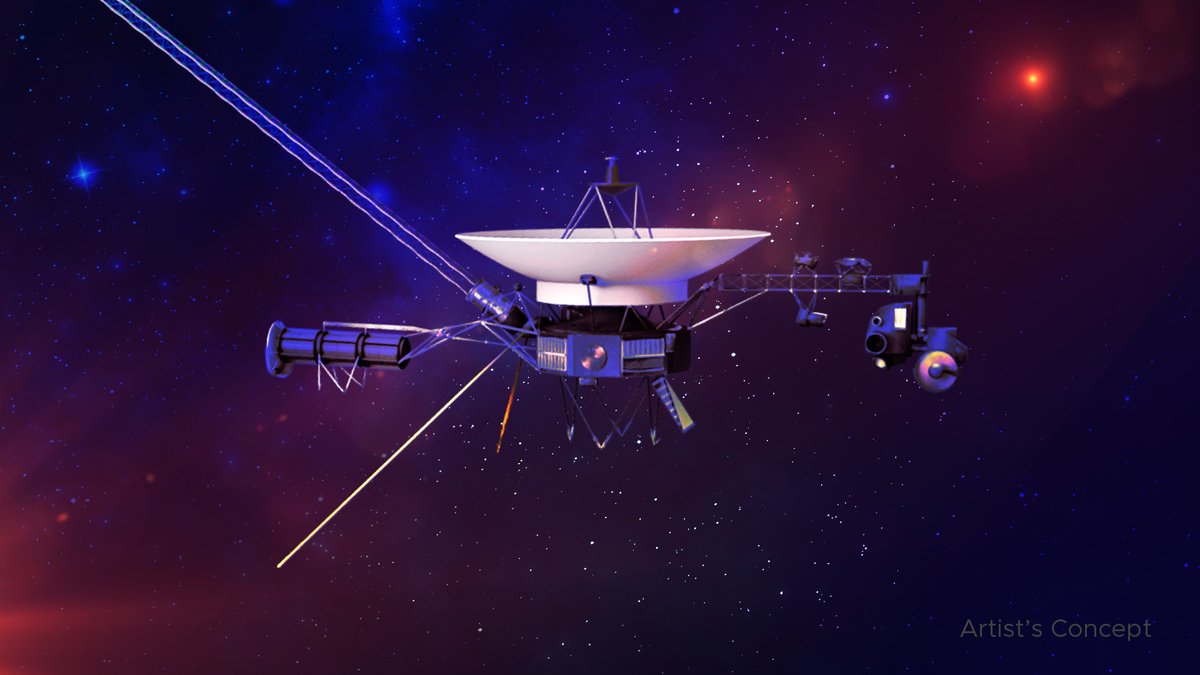
Next Wednesday a spacecraft launched in 1977 will pass a mile marker no human-made object has ever reached. According to NASA, Voyager 1 will be one light-day from Earth on Wednesday 18 November 2026 at 5:16:07 a.m. EST, which is 11:16:07 in Rome.
How far is a light-day?
A light-day is the distance light travels in 24 hours: 16,094,799,096 miles, or 25,902,068,356 kilometres, in NASA's figures. For comparison, light takes about 1.3 seconds to reach the Moon and about eight minutes and 20 seconds to arrive from the Sun. From 18 November, a command sent from Earth to Voyager 1 will need a full day to arrive, and its reply another full day to come back.
NASA notes that the journey will have taken 49 years, two months and 11 days since launch on 5 September 1977. Voyager 1 flew past Jupiter and Saturn, took the famous "Pale Blue Dot" image of Earth, and in August 2012 became the first spacecraft to enter interstellar space. It is still sending data back and still carries the Golden Record, a message for anyone who might one day find it.
Why it matters to everyone
Very few space milestones can be understood without a technical background. This one can: a machine built with 1970s technology is now so far away that even light needs a day to cover the gap. It is also a reminder of how vast space is. Voyager 1 is cruising at nearly 61,000 km/h and, says NASA, will pass within about 1.7 light-years of the star Gliese 445 in some 40,000 years.
What to watch
NASA's live distance counter lets anyone watch the figure roll past the one light-day mark in real time on 18 November. Its twin, Voyager 2, which took a different route to visit Uranus and Neptune, is expected to reach the same distance in November 2035. Signals suggest the milestone will also open a long run-up to the 50th anniversary of both Voyager launches in 2027.
Sources
Get the stories first
Short, sourced news from NEXT NEWS HUB. Occasional emails — unsubscribe any time.