NASA's Lucy becomes the first spacecraft to reach Jupiter's Trojan asteroids
By Next News Hub Editorial Team · Published · 1 min read
Five years after launch and more than 2.2 billion miles later, Lucy has entered the Trojan asteroid swarm ahead of Jupiter. Its first Trojan flyby, of Eurybates, is set for 11 August 2027.
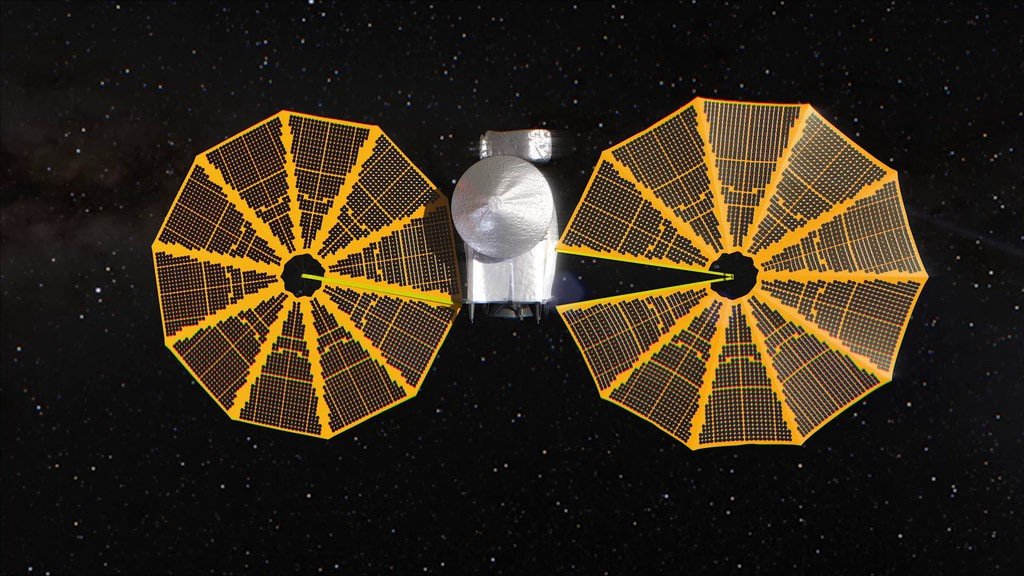
A NASA probe has reached a part of the solar system no spacecraft has visited before. On 28 October 2026 NASA said that Lucy, launched on 16 October 2021, is the first spacecraft to enter the region of the Jupiter Trojan asteroids.
What we know
Lucy has travelled more than 2.2 billion miles. Engineers track its position by radio signals and star images as it approaches Jupiter's Lagrange point 4 (L4), one of two "islands of stability" where thousands of asteroids share Jupiter's orbit around the Sun. The L4 group travels ahead of the planet; a second group, around L5, trails behind it. The Trojans are about as far from Jupiter as Jupiter is from the Sun, roughly 484 million miles.
Because the asteroids are on average more than 6 million miles apart, they will look like pinpricks of light until Lucy closes in on a target. Its first Trojan encounter, with Eurybates, is scheduled for 11 August 2027. NASA says the spacecraft and instruments are operating as expected in the colder, dimmer environment more than five times farther from the Sun than Earth.
The road ahead
After Eurybates, Lucy will visit Polymele (September 2027), Leucus (April 2028) and Orus (November 2028). It will then return to Earth in 2030 for a third gravity assist that sends it to the trailing swarm, where it will study the binary pair Patroclus and Menoetius in March 2033.
Why it matters
Scientists see the Trojans as leftovers from the formation of the planets 4.5 billion years ago. Studying them up close should help test theories of how the giant planets formed and moved to where they are now.
Signals suggest
Our inference: the first close-up images of a Trojan in August 2027 are likely to be one of the most watched planetary science moments of that year.
Key dates
- 16 October 2021: launch.
- 28 October 2026: NASA confirms arrival in the Trojan region.
- 11 August 2027: Eurybates flyby.
- March 2033: Patroclus and Menoetius.
Sources
Get the stories first
Short, sourced news from NEXT NEWS HUB. Occasional emails — unsubscribe any time.