ESA's PLATO, the hunter of Earth-like planets, heads to Kourou for a planned April 2027 launch
By Next News Hub Editorial Team · Published · 2 min read
Europe's PLATO space telescope, built to find Earth-like planets around Sun-like stars, is due to travel to Kourou in December-January and launch on Ariane 6 in April 2027.
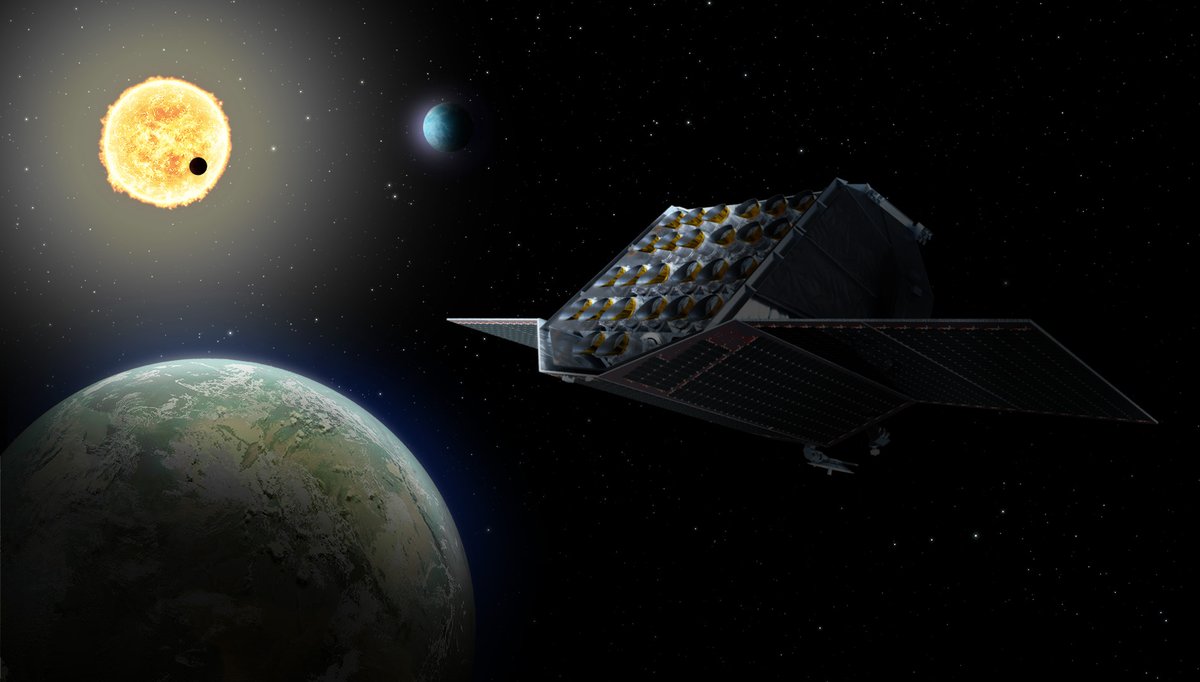
Is there another Earth out there? A European spacecraft built to answer that question is entering its final months on the ground. According to the European Space Agency's official mission timeline, PLATO (PLAnetary Transits and Oscillations of stars) is scheduled to be shipped to Europe's Spaceport in Kourou, French Guiana, between December 2026 and January 2027, for a launch in April 2027 on an Ariane 6 rocket operated by Arianespace.
Where the mission stands
PLATO completed its environmental test campaign at ESA's technical centre ESTEC, in the Netherlands, in July 2026, and passed its qualification and acceptance review board at the start of September. From September to November 2026 the team is running further functional tests and preparing the launch campaign.
What PLATO will do
The spacecraft carries 26 cameras that will watch hundreds of thousands of bright stars for tiny, regular dips in brightness, the sign of a planet passing in front of its star. Its specific goal is to find rocky planets in the "habitable zone" of stars like the Sun, where temperatures could allow liquid water, and to measure the stars themselves precisely enough to estimate the planets' size, mass and age.
After launch, PLATO will take about 30 days to reach its observing position near the Sun-Earth L2 point, 1.5 million kilometres from Earth, followed by about three months of commissioning and four years of nominal science operations.
Why it matters
Thousands of exoplanets are known, but very few Earth-sized worlds orbiting Sun-like stars at Earth-like distances. PLATO is designed to fill exactly that gap, building a catalogue of the most promising "second Earths" that future telescopes could study for signs of atmospheres and, one day, life.
Signals suggest
Our inference: the arrival of the spacecraft in Kourou will be the clearest sign that the April date holds. Launch dates for science missions often move by weeks or months, so April 2027 should be read as the current plan. We will follow the shipment and launch campaign.
Key dates
- July 2026: environmental tests completed at ESTEC.
- September 2026: qualification and acceptance review.
- December 2026 - January 2027: transfer to Kourou.
- April 2027: planned launch on Ariane 6.
Sources
Get the stories first
Short, sourced news from NEXT NEWS HUB. Occasional emails — unsubscribe any time.