BepiColombo arrives at Mercury: orbit insertion on 21 November 2026
By Next News Hub Editorial Team · Published · 1 min read
After an eight-year journey, the ESA-JAXA mission BepiColombo enters orbit around Mercury on 21 November 2026. Its two orbiters separate on 9-10 December.
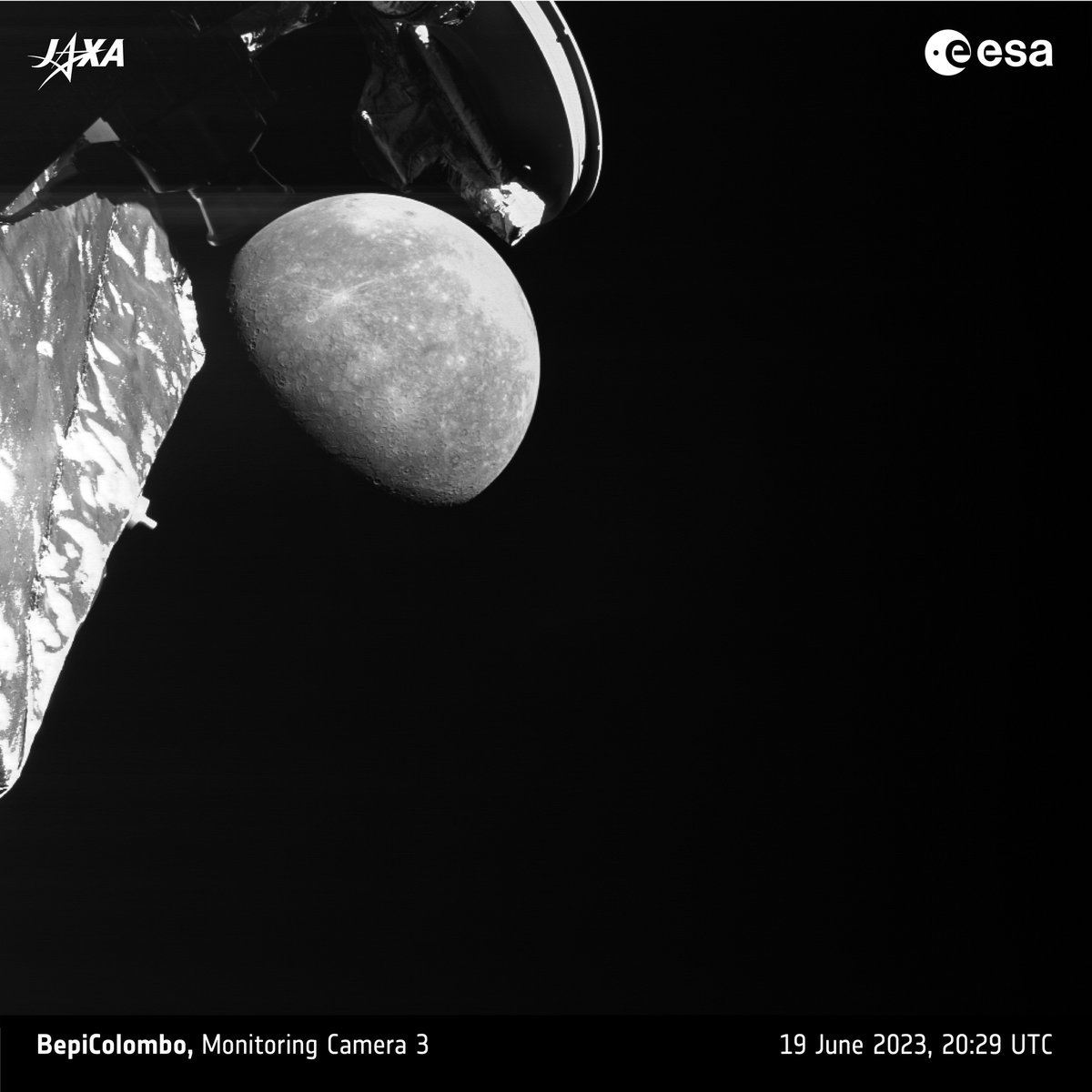
The smallest planet in the solar system is about to get two new companions. On 21 November 2026, BepiColombo, the joint mission of the European Space Agency and Japan's JAXA, enters orbit around Mercury after a journey of eight years that began with its launch in October 2018.
What we know
According to ESA's mission updates, the Mercury Transfer Module (MTM), which propelled the spacecraft with electric thrusters and guided it through planetary flybys, separated from the stack on 3 September 2026. "The composite spacecraft will enter orbit around Mercury on 21 November 2026, and MPO and Mio will separate from each other on 9–10 December 2026. The mission's science phase is set to begin in April 2027."
The two orbiters are ESA's Mercury Planetary Orbiter (MPO) and JAXA's Mercury Magnetospheric Orbiter, Mio. After the transfer module's separation, MPO's instruments were switched on together for the first time and are in good health, ESA says. Its science camera SIMBIO-SYS, an Italian-led instrument supported by the Italian Space Agency, took its first image in space. On 24 September, MPO performed its first trajectory correction since separation, a push of 11.4 m/s.
Why it matters
Mercury is hard to reach: a spacecraft must shed a great deal of speed to be captured by a planet so close to the Sun. BepiColombo, named after the Italian mathematician Giuseppe "Bepi" Colombo, is only the third mission to visit Mercury and the first to send two orbiters, which will study the planet's surface, interior and magnetic environment.
Signals suggest
Our inference: orbit insertion is a sequence of manoeuvres rather than a single burn, so ESA will likely confirm success over several days. Mainstream coverage is likely to peak around 21 November and again with the first science images in 2027.
Key dates
- 3 September 2026: transfer module separates.
- 21 November 2026: orbit insertion around Mercury.
- 9-10 December 2026: MPO and Mio separate.
- April 2027: science phase begins.
Sources
Get the stories first
Short, sourced news from NEXT NEWS HUB. Occasional emails — unsubscribe any time.